
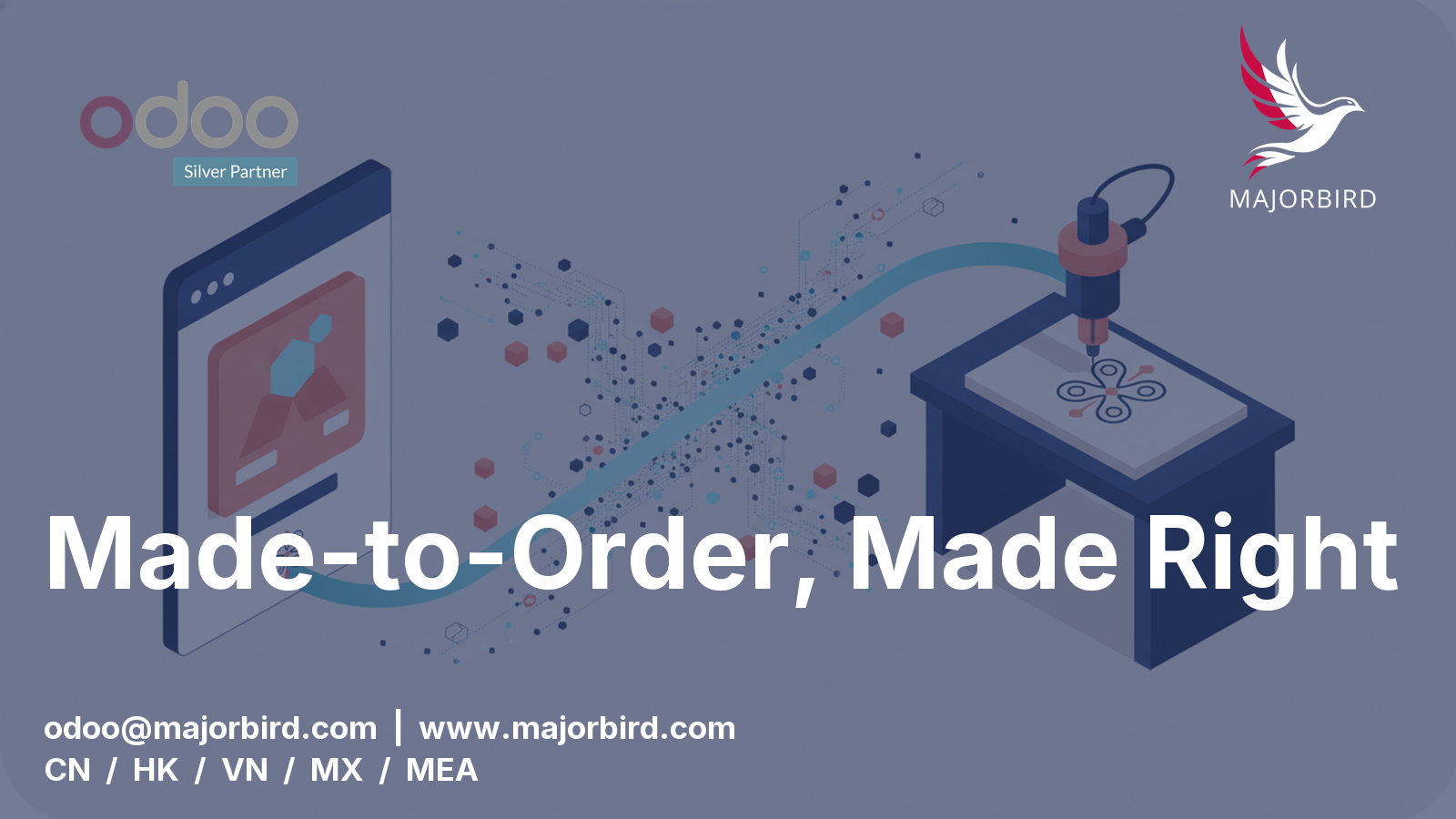
Sell a Personalized Product Online, Let a Subcontractor Build It Right
Made-to-order and personalized products sell well online: engrave a name, add a monogram, print a custom message. The commercial upside is obvious. What is less obvious, until it goes wrong once, is how fragile the path from "customer typed some text into a box" to "the right words end up on the right physical item" can be.
The personalization text a customer enters is not decoration on the order, it is a specification. If that text gets summarized, merged with another line, or simply doesn't survive the trip from the storefront to the workshop, the product that ships is wrong. Multiply that by every order and it stops being an edge case and starts being a support queue.
Where it actually breaks
Merging order lines is convenient bookkeeping and a common trap: a personalization note attached to one line can quietly vanish when two similar lines get combined for a manufacturing order. Time-sensitive personalization detail, like an expiry date engraved on a product, needs to be validated as real, current data, not just accepted as free text and passed along unchecked. And when orders arrive through an external channel via an API rather than typed directly into the ERP, the personalization field has to map correctly end to end, with nothing dropped or truncated on the way in.
Each of these is a small technical detail. Together, they are the difference between "the engraver got exactly the right instructions" and "someone has to call the customer to ask what they actually ordered."
The fix: treat personalization as a specification, not a note
The right design routes personalization text through as an explicit specification on the manufacturing order that reaches the person doing the work, not as an incidental comment that depends on nobody merging or truncating it along the way. That means it survives order-line consolidation, it gets validated where the input has real constraints (like a date needing to make sense), and it maps cleanly regardless of which channel the order came in through, storefront, API, or manual entry.
Handled well, the subcontractor or the shop floor receives exactly what the customer asked for, with nothing lost in translation between "add to cart" and "cut the material." That is the actual product being sold in a personalization business: not just the item, but the guarantee that what was requested is what gets made.
Our take
Personalization is a great business model with an unforgiving failure mode: the mistake is invisible until the customer receives the finished piece. Getting the data path right, so free text becomes a reliable specification instead of a game of telephone across systems, is exactly the kind of unglamorous integration work that makes an Odoo-based made-to-order operation trustworthy at scale. If your team is running personalized or made-to-order products through Odoo and wants that path audited or built properly, talk to Majorbird at odoo@majorbird.com or www.majorbird.com.